The Extreme Environments Laboratory seeks to explore resilient materials and structures for extreme environments in propulsion, hypersonic flight, space exploration and energy applications.
Projects
-
- In-Space Manufacturing
- Container-less Levitation
- Functional Sensors
- Payload System
- High Temperature Coatings (Hypersonic and CMAS)
- Wear Resilient Ceramic Coatings
- In-Space Manufacturing
Please reach out to Seetha Raghavan for more information at RAGHAVS3@erau.edu.
Equipment
Portable Photoluminescence Piezospectroscopy (PLPS)
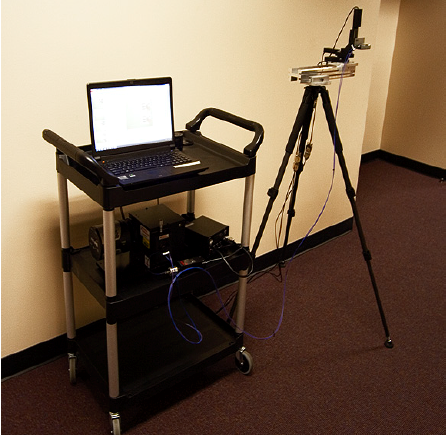
The portable photoluminescence piezospectroscopy (PLPS) system (Figure 6) is capable of taking spectroscopic measurements outside of the microprobe set up [3]. It allows for non-invasive and non-destructive stress detection. This system consists of a spectrograph, CCD, 532 nm variable power laser, and a fiber optic probe that is placed on an x-y-z stage to enable focusing on samples during loading. Key capabilities include automated stress mapping of samples based on Raman/photoluminescence peak positions.
WITec Raman Microscope Alphas 300, 532 nm laser
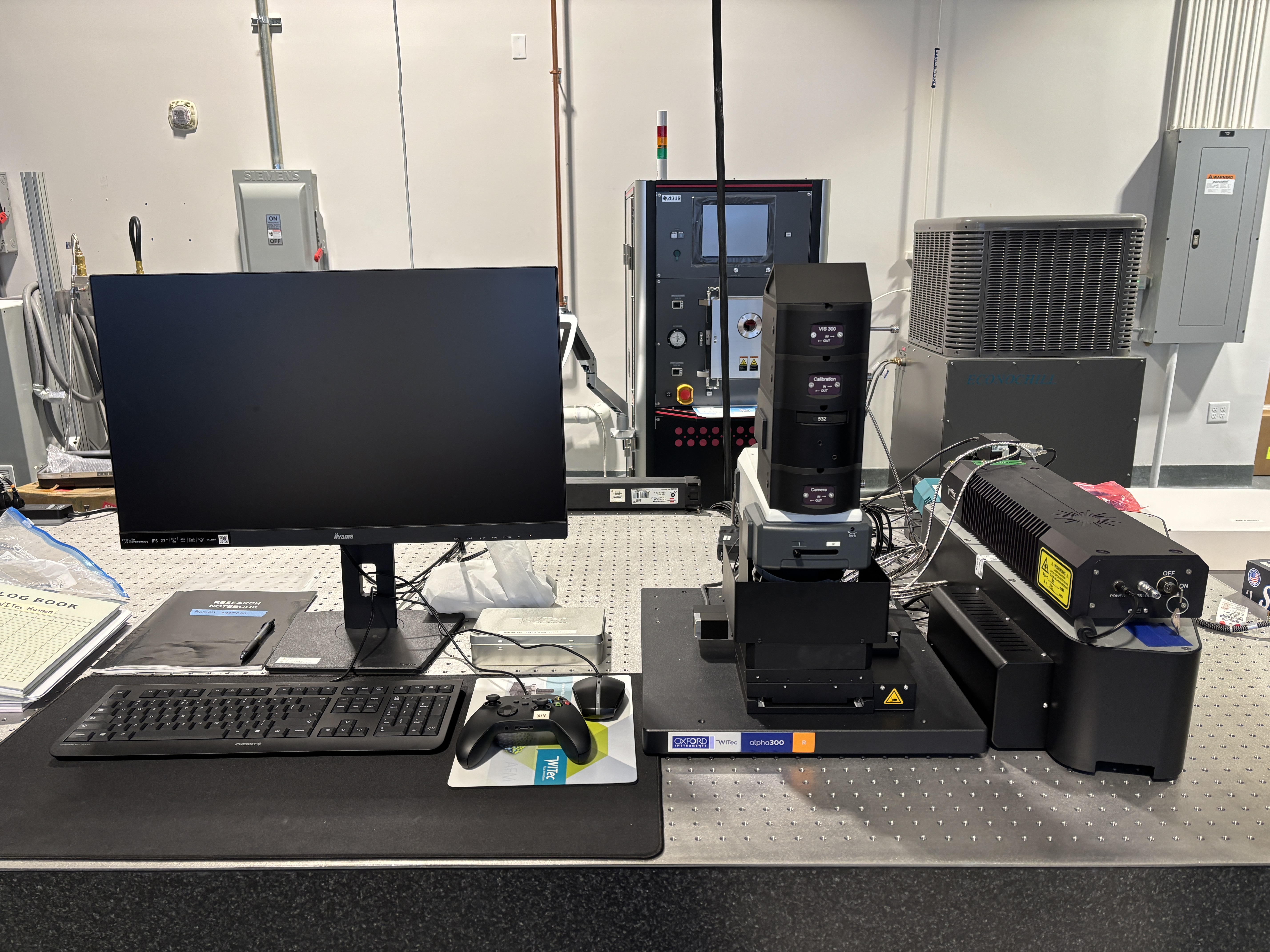
Our WITec Raman Spectrometer is a powerful tool for exploring the chemical and structural landscape of materials with incredible precision. More than just a microscope, it allows us to “see” the molecular fingerprint of a sample, without damaging it, making it ideal for both research and advanced materials analysis.
At our lab, we use the WITec system for a range of high-impact applications, including phase mapping, stress analysis, and real-time monitoring of structural changes. Whether it’s identifying different crystalline forms, detecting residual stress in microstructures, or tracking how materials respond under varying conditions, this system delivers detailed, spatially resolved insight at the microscale. With capabilities like confocal Raman imaging and 3D chemical mapping, the WITec Raman Spectrometer helps us push boundaries in materials science, nanotech, and beyond.
Taber Abrader
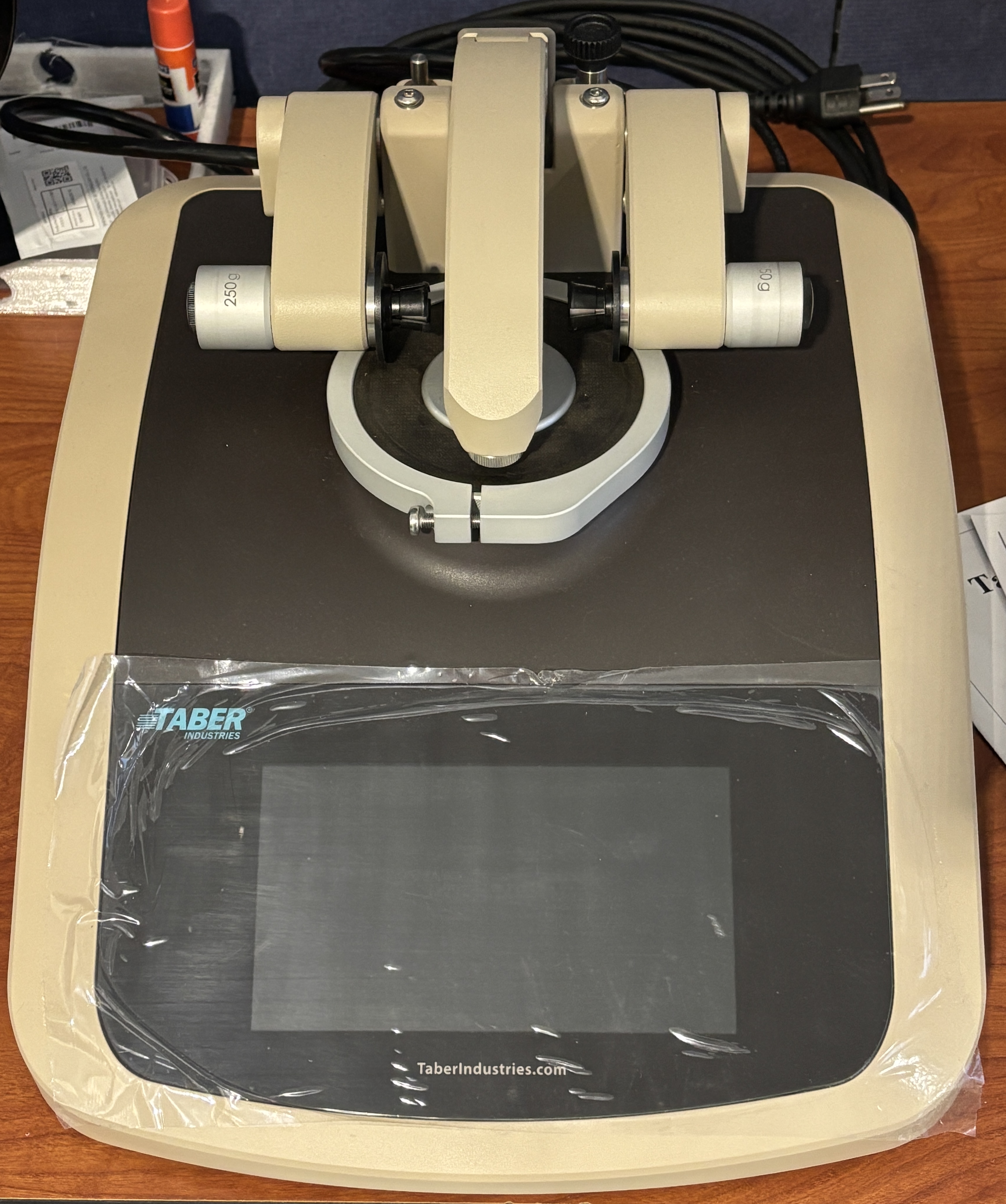
The Taber Abrader is our go-to instrument for testing the durability and wear resistance of materials under real-world conditions. Engineered for precision, this device simulates years of abrasion in a matter of hours—providing reliable, repeatable results that help us evaluate surface coatings, films, plastics, metals, textiles, and more. We use the Taber Abrader to assess how materials hold up to friction, rubbing, and repeated use. It’s especially valuable for comparative wear studies, product development, and quality control, allowing us to fine-tune formulations or finishes based on measurable performance data. Whether we’re developing tougher coatings or validating the longevity of commercial products, the Taber Abrader plays a key role in helping us understand and improve material durability.
Spark Plasma Sintering (SPS) and Chiller
 |
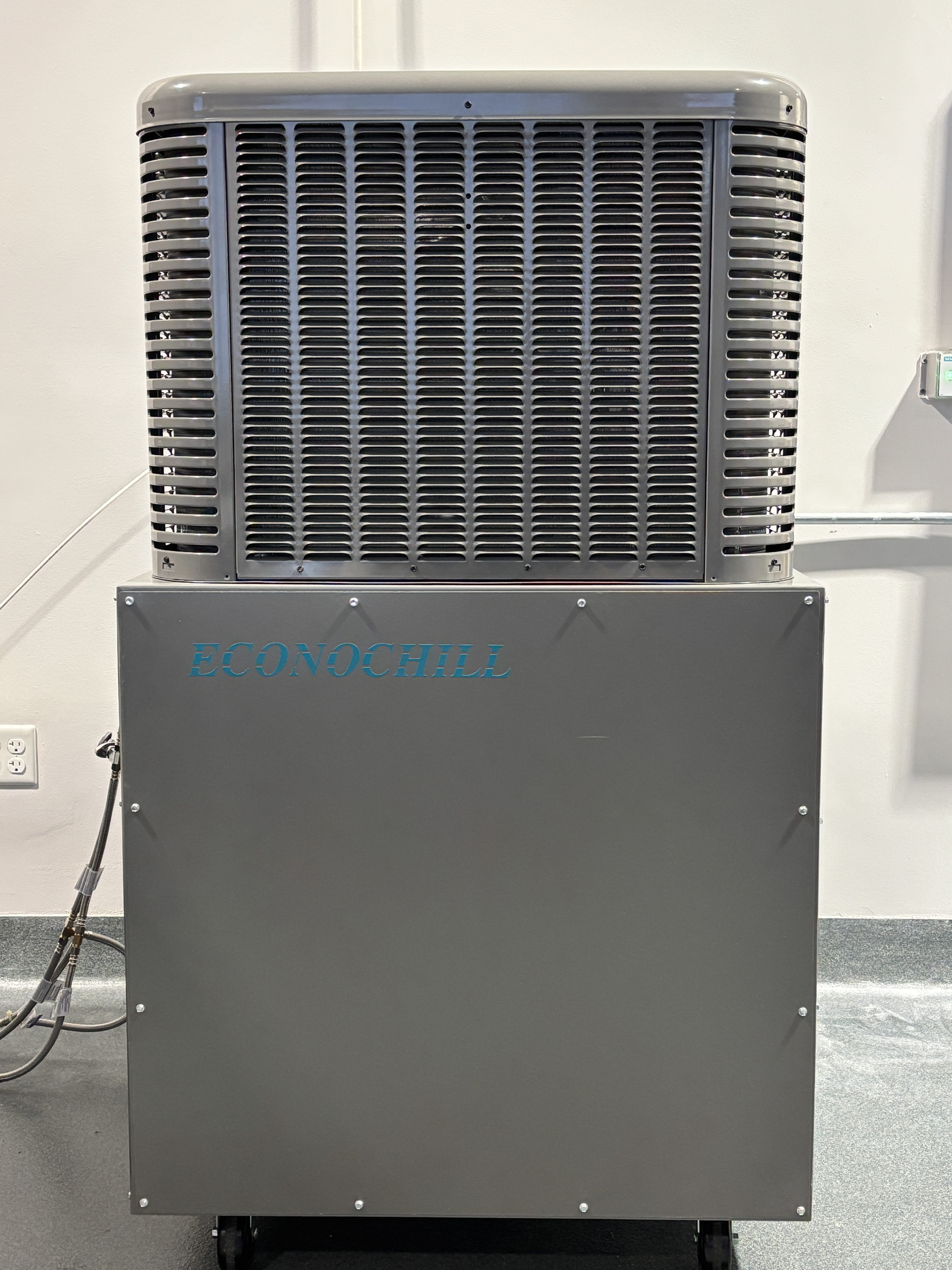 |
| (a) SPS | (b) Chiller |
The AGUS SPS2000 is a high-performance Spark Plasma Sintering system designed for rapid and precise densification of powders into fully consolidated materials. Leveraging pulsed DC current and uniaxial pressure, it enables ultra-fast heating rates, short sintering cycles, and superior control over microstructure and phase composition, ideal for producing dense ceramics, metals, and composites. In our lab, we use the SPS2000 to explore advanced material synthesis, optimize sintering parameters, and create high-performance parts with fine-tuned grain structures and minimal porosity. To ensure thermal stability and efficient heat management, the SPS system is paired with an Econochiller unit. This industrial-grade chiller supports precise temperature regulation, allowing for consistent process control and safe operation during high-temperature runs. Together, the AGUS SPS2000 and Econochiller enable fast, reliable, and scalable sintering—powering innovation in materials science, energy storage, and structural applications.
Psylotech
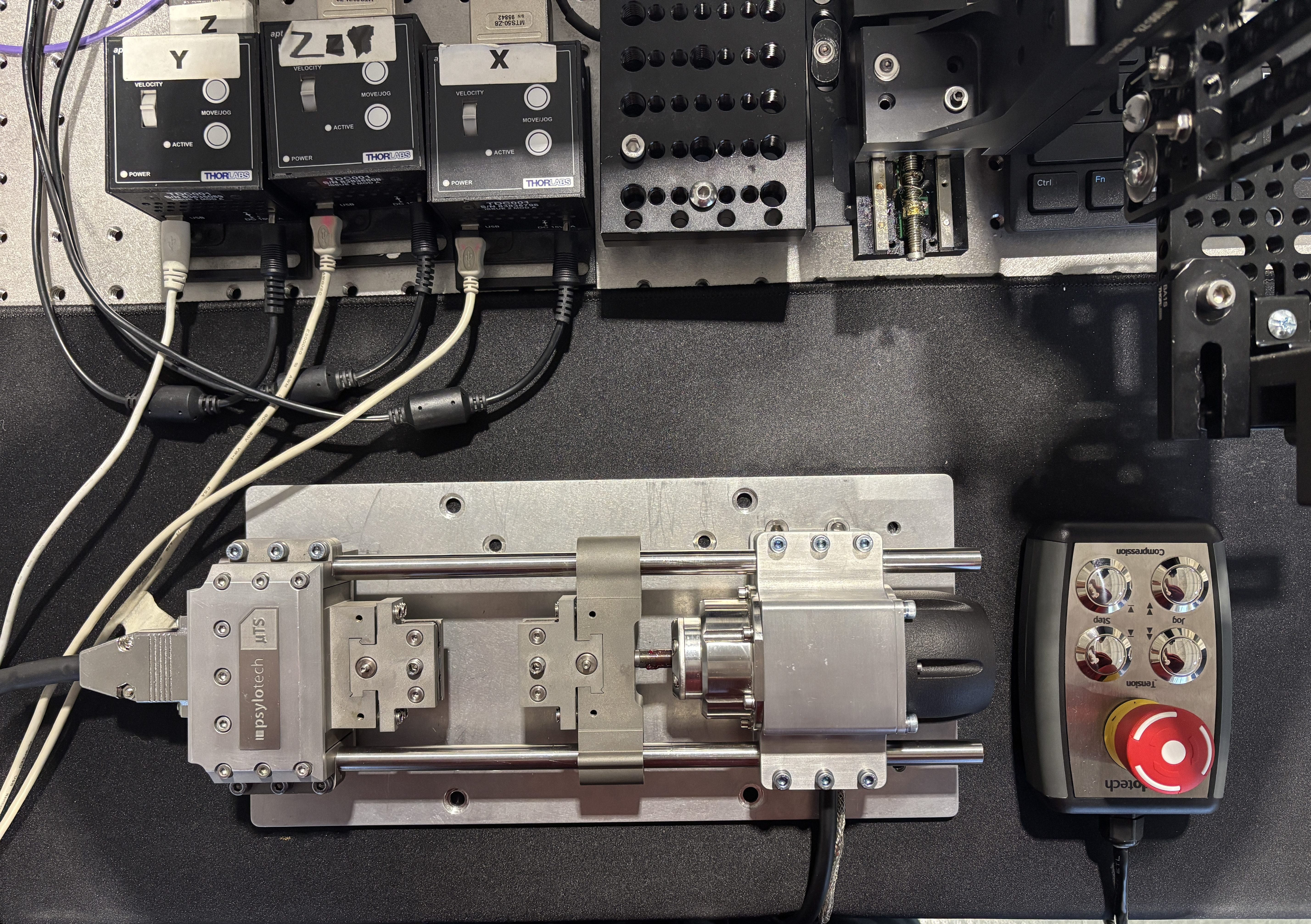
The Psylotech microTS is a precision instrument designed for mechanical characterization of materials at the micro-scale. It enables high-resolution testing of small-scale samples, thin films, and micro-fabricated structures under uniaxial tension, compression, or cyclic loading. With integrated optical and digital image correlation (DIC) capabilities, it allows for real-time strain tracking and deformation analysis. In our lab, we use the microTS to probe the elastic, plastic, and failure behavior of materials with micro- to nano-scale dimensions—critical for research in MEMS, biomedical devices, thin coatings, and advanced composites. Its sensitive force and displacement control make it ideal for studying rate-dependent behavior, fracture toughness, and fatigue at small scales. Whether validating models, developing novel materials, or exploring microstructural mechanics, the Psylotech microTS provides the fine-grained insight needed to bridge the gap between small-scale structure and large-scale performance.
E6 Infared Furnace

The E6 Chamber Heater (ChamberIR) by Research Inc. is a powerful, infrared-based heating system designed for controlled, high-temperature processing in enclosed environments. Engineered for uniform radiant heating, it enables rapid and precise temperature ramp-up without direct contact—ideal for materials testing, thin film processing, and in-situ thermal studies. In our setup, the E6 heater is integrated into environmental chambers to facilitate temperature-dependent experiments, including phase transitions, thermal expansion, and stress relaxation behavior. Its ability to deliver stable, repeatable heating profiles up to high temperatures makes it an essential tool for research that demands thermal uniformity and fast response times. Compact, efficient, and highly controllable, the ChamberIR system supports our work in advanced materials research where thermal conditions play a critical role in performance and transformation.
Levitator d-SAL